
The problem with catastrophizing
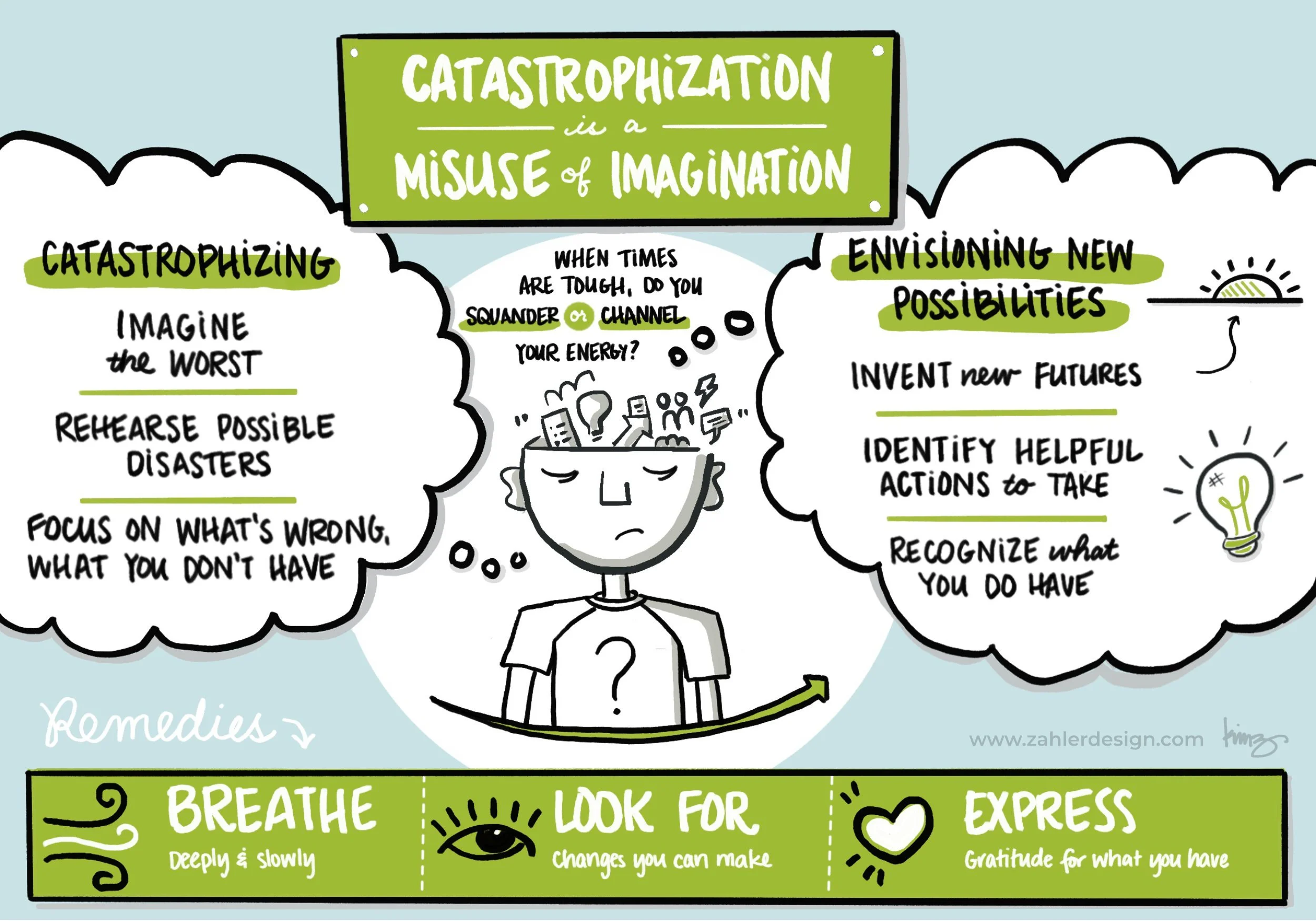
I don’t know about you, but I am an expert at anticipating all sorts of disasters. My cat sneezed? She must be dying!
But when I really look at it, my track record of predicting negative events is thankfully dismal. The disasters I could describe in such detail—that caused considerable mental distress—almost never materialize. So what’s happening?
According to the Cleveland Clinic,
Catastrophizing is one of the most common cognitive distortions that involves believing the worst possible outcome will occur as a result of some action or event, even if it’s very unlikely. When you catastrophize, you convince yourself that an event is far worse than is realistic or probable. Catastrophizing is often used as an unhealthy coping mechanism to control an uncomfortable situation. https://health.clevelandclinic.org/catastrophizing
Learning the name and definition of this phenomenon was a relief. External circumstances may still be out of my control, but I can understand and guide my inner thought life away from suffering. This led me to see that I already have some powerful tools within me.
Instead of anticipating unlikely disasters, what Dr. Albers of the Cleveland Clinic calls “negative daydreaming,” I can use my imagination to spot opportunities. Instead of wasting my energy on things I can’t do anything about, I can harness that energy toward actions that can make change possible.
The economy is still a rollercoaster of uncertainty, technology is changing at lightning speed, but I can find stillness inside and opportunity outside. When I notice myself thinking of everything that can go wrong and exaggerating my fears, I take a few simple steps.
Breathe deeply. I pause to focus on the area of my heart and feel the air coming in and out, making my chest rise and fall. When I am focused on those sensations, I slow down the pace of my breathing and use “Box Breathing.” To use box breathing, (a) inhale for a slow count of four, (b) hold the breath in for a count of four, (c) slowly exhale to a count of four, and (d) hold the breath out for a count of four. This slows my heart rate and reduces my stress level, allowing me to work on my thoughts.
Look for changes I can make. Now that I’m physically calmer, I can start brainstorming. For example, if my target market isn’t responding to my business as I’d hoped, I can start to imagine if there are other people who might be excited to buy what I’m selling.
Express gratitude. Lastly, I name a few items that are going well right now. I give thanks for having a comfortable home, my health, and the ability to imagine new possibilities.